Chicken Tractors and Pasture Rotation: How Laying Hens Build Soil While They Feed Themselves
 E. Whitfield
Most people think of chickens as egg machines. Feed them grain, collect eggs, repeat. But a flock of laying hens managed correctly is one of the most powerful soil-building tools available to a small farm. The trick is keeping them moving.
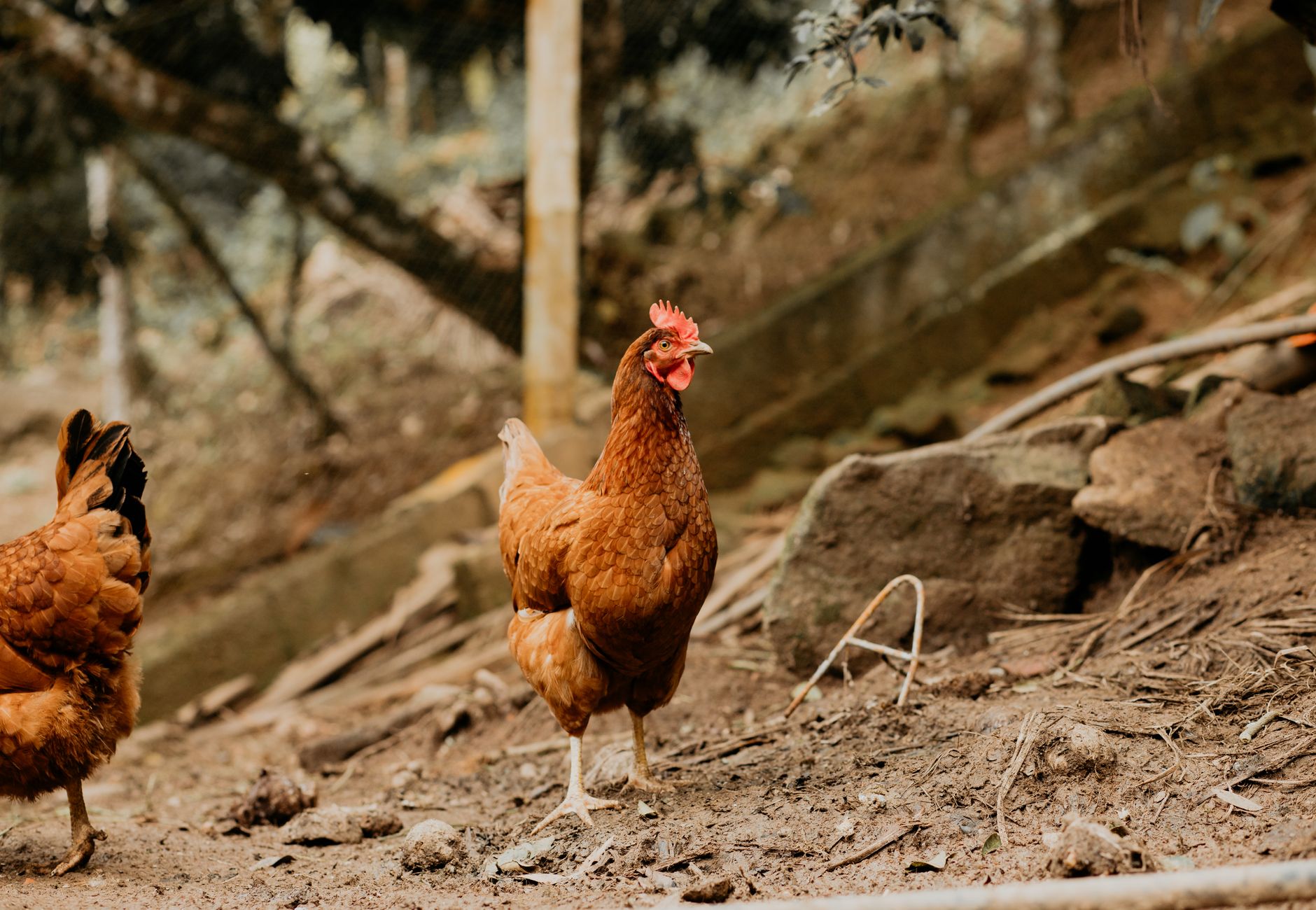 Photo by Bruna Fossile on Pexels.
Chicken tractors and rotational paddock systems are two approaches to the same idea: let hens do what hens do naturally, scratching, eating insects and seeds, depositing manure, then move them before they destroy what they're standing on. The difference between a bare-dirt chicken run and a lush paddock comes down almost entirely to rest periods and stocking density.
What Chickens Actually Do to Soil
A laying hen deposits roughly 0.2 pounds of manure per day. That manure runs about 1.5% nitrogen, 1.5% phosphorus, and 0.6% potassium by dry weight, alongside a useful slug of calcium and trace minerals. Spread across moving ground, that's free fertility. Left in one place, it's a nitrogen burn and a parasite nightmare.
Beyond manure, the scratching behavior itself matters. Hens break up surface crusting, incorporate organic matter, and physically disturb pest larvae in the top inch of soil. Wireworms, grubs, and fly larvae don't stand a chance under an active flock. Studies from Rodale Institute and several UK organic research stations consistently show reductions in soil-borne pest pressure when hens follow behind other livestock or precede vegetable plantings.
The uric acid in poultry manure also acts as a mild microbial stimulus. Unlike mammal urine, which can overwhelm soil biology at high concentrations, dilute poultry deposits appear to feed bacterial populations without suppressing fungal networks, provided the stocking rate stays reasonable.
Chicken Tractors: The Small-Farm Version
A chicken tractor is simply a portable coop with no floor. You move it daily or every few days across a lawn, pasture, or garden bed. The hens eat down the vegetation, scratch, fertilize, and then you drag or wheel the tractor to the next patch.
For a backyard or market garden, a tractor sized for 6 to 12 birds works well. Wire skirts prevent digging out; a solid roof panel keeps weather and predators at bay. The classic "hoop tractor" design uses bent cattle panel covered with hardware cloth, attached to a simple wooden frame. Cheap, light, and effective.
The key metric for tractor systems is square footage per day. Too small, and birds over-graze a patch, compacting soil and leaving bare ground behind. A reasonable starting point is 10 square feet of new ground per bird per day. In practice, that means moving a 10-bird tractor at least 100 square feet daily.
graph TD
    A[Fresh Pasture Paddock] --> B(Hens Graze and Scratch)
    B --> C[Manure Deposited]
    C --> D(Paddock Rests 30-60 Days)
    D --> E[Microbial Activity Peaks]
    E --> F(Vegetation Regrows)
    F --> A
Paddock Rotation for Larger Flocks
Once you're keeping 50 or more birds, individual tractors become impractical. Permanent electric net fencing, like that made by Premier1, lets you divide a pasture into paddocks and rotate the whole flock on a schedule.
The rest period is the variable most farmers underestimate. Thirty days is often cited, but 45 to 60 days produces noticeably better results in humid climates with decent rainfall. Longer rest allows forage to fully recover, gives parasite eggs time to die off without a host, and lets soil microbes process the deposited manure into stable humus rather than volatile ammonia.
Integrating hens after cattle or sheep amplifies the benefit. Fly larvae hatching in ruminant manure become a free protein source for the flock; the hens scratch the pats apart, speeding decomposition and interrupting the fly life cycle. Joel Salatin popularized this sequence at Polyface Farm, but the underlying logic predates him by centuries on traditional mixed farms across Europe and Asia.
Feed Cost Math
Pasture access meaningfully reduces feed consumption when managed well. Research from Virginia Cooperative Extension found that pastured hens on good-quality forage can meet 20 to 30 percent of their nutritional needs from grass, insects, and seeds during peak growing months. On a flock of 100 birds consuming roughly 25 pounds of feed per day, that's a real reduction in input cost, not a rounding error.
Combine that with the fertility value being deposited, and the return-on-investment case for rotation becomes straightforward. You're not just cutting costs; you're building an asset in the soil that pays out over years.
Starting Small
You don't need a hundred acres to prove the concept. A quarter-acre backyard divided into four rotating sections, each resting three weeks while the others cycle through, is enough to demonstrate visible improvement in soil texture and earthworm counts within a single season.
Start with a simple tractor. Move it every day. Pay attention to what the ground looks like after the birds leave and again three weeks later. That gap, the before and the after, is where the whole system reveals itself.
Get Authentic Farming in your inbox
New posts delivered directly. No spam.
No spam. Unsubscribe anytime.