Hugelkultur: The Buried Wood Method That Builds Soil Fertility for Decades
 E. Whitfield
Most soil-building strategies ask something of you every season, more compost, more mulch, more inputs. Hugelkultur flips that entirely. Build it once, and the bed works for you for the next ten to twenty years.
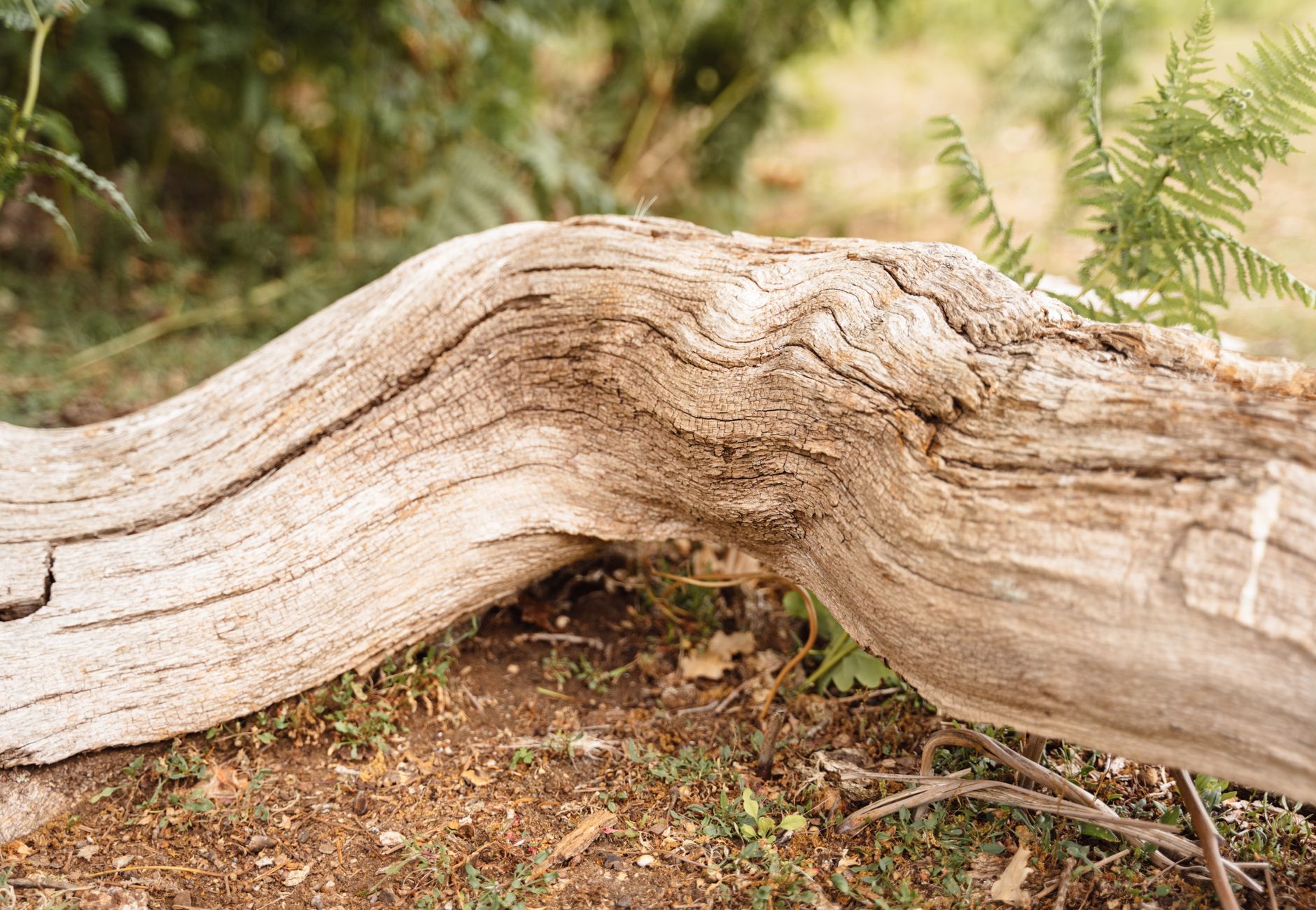 Photo by Olga Lioncat on Pexels.
The word is German: Hügel means hill, Kultur means cultivation. The practice is older than the term. Central European farmers buried rotting wood under garden mounds for centuries before anyone gave it a name. What they understood intuitively, soil scientists now confirm: decomposing wood is one of the most complex, long-acting fertility sources a grower can access.
What's Actually Happening Underground
When you bury logs and woody debris beneath a mound of soil, you're not just hiding dead wood. You're installing a slow-release system that does several things at once.
Fresh wood is high in carbon. As fungi and bacteria break it down, a process that takes years, not months, they release nutrients in a steady, measured stream rather than a flood. No nitrogen spike, no crash. Just consistent feeding that mirrors how forest floors actually work.
Wet wood also acts as a sponge. A well-saturated log can hold its own weight in water. During dry stretches, that reservoir wicks moisture upward into the root zone. Growers in drier climates report cutting irrigation needs by half or more once a hugelkultur bed matures, that's not an exaggeration, it's the physics of water-holding capacity at work.
And then there's the biology. Rotting wood is prime fungal habitat. Lay down the right mix of hardwood logs and smaller woody debris, and you're essentially inviting mycorrhizal networks to colonize from below. The fungal density in a mature hugelkultur bed rivals that of an old-growth forest floor.
How to Build One
There's no single right way, but here's the sequence that works:
graph TD
    A[Dig a shallow trench 30-60cm deep] --> B[Layer large logs on the bottom]
    B --> C[Pack smaller branches and woody debris around logs]
    C --> D[Add compost or aged manure layer]
    D --> E[Cover with topsoil and turf]
    E --> F[Mound to 60-120cm height]
    F --> G[Plant immediately or after settling]
Hardwoods decompose slower and feed longer, oak, maple, apple, and alder are ideal. Avoid black walnut (allelopathic) and any treated lumber. Soft woods like pine work but break down faster and acidify slightly, so balance them with hardwood if you use them.
Fresh logs will cause a temporary nitrogen drawdown as microbes consume available N to process the carbon. Either wait six months before planting nitrogen-sensitive crops, or inoculate with finished compost and plant nitrogen-fixing species, beans, peas, clover, in the first season. By year two, the bed feeds itself.
Size and Shape Matter More Than Most People Think
A hugelkultur bed that's only 30cm tall won't give you the full effect. The mound height is what creates the internal moisture gradient, warm, aerated sides for drought-tolerant plants; cooler, moister lower slopes for greens and herbs. Aim for at least 60cm; 100cm gives you the full range of microclimates.
Orientation matters too. In temperate climates, running beds east-west puts the south-facing slope in full sun, perfect for tomatoes, peppers, or squash. North-facing slope stays cooler and damper: ideal for lettuce, cilantro, or anything that bolts in heat.
What to Expect Year by Year
Year one is the awkward phase. The mound settles, microbial activity runs high, and the bed looks uneven. Plant it anyway, deep-rooted crops like squash or sunflowers anchor the mound while the biology below establishes itself.
By year three, you'll notice something shift. Soil texture improves dramatically. Water infiltration speeds up. Plants root deeper without any intervention from you. What's happening is that the wood is hitting peak decomposition, maximum fungal activity, maximum nutrient release, maximum water retention.
Peak fertility typically runs from years four through ten, depending on log size and species. After that, the wood fully mineralizes into rich, dark, spongy humus, essentially humanure-grade organic matter, and you start the cycle again if you choose.
Why This Belongs in Any Serious Grower's System
Hugelkultur won't replace everything. It's not a broadcast solution for field-scale production. But for market garden beds, homestead growing, or any situation where you're building permanent or semi-permanent growing infrastructure, it's one of the highest-return investments per hour of labor you can make.
You're essentially converting waste, fallen trees, pruned branches, woody debris that would otherwise be burned or chipped, into decades of fertility. No purchased inputs. No annual amendments. Just buried wood and time.
That's what going beyond organic actually looks like: not just avoiding synthetic inputs, but building systems that generate fertility rather than consume it.
Get Authentic Farming in your inbox
New posts delivered directly. No spam.
No spam. Unsubscribe anytime.