No-Till Farming: The Soil-Building Case for Putting Down the Plow
 E. Whitfield
Authentic Farming is reader-supported. Some links below are affiliate links, and we may earn a commission on purchases, at no extra cost to you.
Tillage is one of those practices that feels productive. You turn the soil, it looks clean and loose and ready, and you get the psychological satisfaction of a fresh start. The problem is that fresh start comes at a significant cost to the living system underneath your feet.
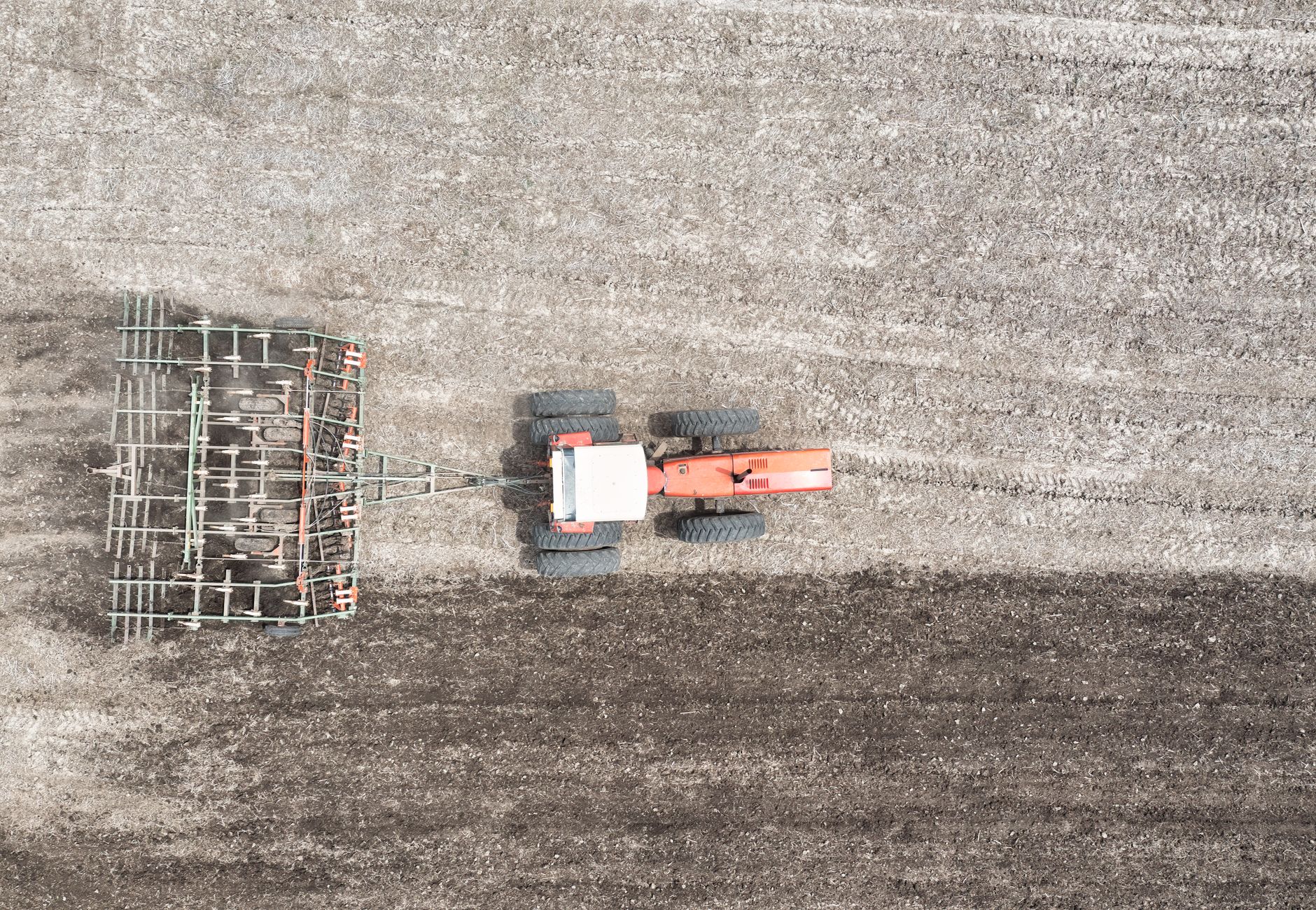 Photo by
 Every pass with a plow or rototiller is a disruption event for soil biology. Fungal hyphae get shredded. Earthworm populations drop. Aggregate structure, built over months or years by root exudates and microbial glues, collapses in a single afternoon. What looks like preparation is often destruction.
No-till farming takes a different position: leave the soil profile intact, and let biology do the work tillage was supposed to accomplish.
What Tillage Actually Does to Soil
Conventional wisdom says you till to aerate, to break up compaction, and to incorporate organic matter. Each of those goals is real. The issue is that tillage solves short-term problems while creating long-term ones.
When you expose soil to air, you trigger a burst of microbial oxidation. Organic matter burns off fast. Carbon that took years to accumulate releases into the atmosphere within weeks. Repeated tillage creates a cycle: you add fertility inputs to replace what oxidized, then till again the following season, burning off more. It's an expensive treadmill.
Compaction is trickier. Tillage does break up compacted layers temporarily. But without living roots and biology rebuilding structure, the same layers reform under rain and equipment pressure. You end up tilling more often, not less.
The Biology Argument for No-Till
Leave soil undisturbed long enough, and something interesting happens. Fungal networks establish themselves. Mycorrhizal threads extend from plant roots and connect to mineral particles, trading nutrients for carbon. Predatory nematodes keep bacterial populations cycling. Earthworms tunnel, pulling organic matter downward and leaving behind castings rich in plant-available nutrients.
This system is self-reinforcing, but it depends on physical continuity. Slice through it repeatedly and it never stabilizes. No-till gives the network time to build.
Research from the Rodale Institute and long-term studies out of Kansas State have consistently shown that no-till soils accumulate organic matter faster than tilled soils, particularly in the top two inches where biological activity concentrates. Some studies show organic matter gains of 0.1 to 0.3 percent per year under well-managed no-till systems. That sounds small until you calculate the water-holding capacity, cation exchange capacity, and biological activity packed into each percentage point.
The Transition Is Harder Than the Practice
Here's the honest part: transitioning from conventional tillage to no-till is not smooth. The first one to three years often look rough. Weed pressure spikes because the soil seed bank isn't disrupted. Compaction layers already present don't disappear overnight. Yields can dip before they recover.
Most farmers who abandon no-till do so during that transition window. They interpret the difficulty as evidence the system doesn't work, when it's actually evidence the soil hasn't had time to recover.
Persistence through that window matters. Cover crops help enormously; their roots break compaction mechanically while their residue feeds surface biology and suppresses weeds. Strategic use of a subsoiler (run once, deep, then left alone) can address severe hardpan without inverting the surface horizon.
graph TD
    A[Tilled Soil] --> B(Disrupted Biology)
    B --> C{Compaction Returns}
    C --> D[Repeat Tillage]
    D --> A
    E[No-Till Start] --> F(Cover Crop Residue)
    F --> G(Fungal Network Builds)
    G --> H((Stable Soil Structure))
Combining No-Till With Organic Inputs
No-till works hardest when paired with a consistent supply of organic matter at the surface. Compost top-dressed rather than incorporated. Cover crop residue left as mulch. Wood chip pathways at the edges of beds. The goal is feeding surface biology continuously so it pulls fertility downward naturally.
Without that organic matter input, no-till alone can plateau. You stop destroying the system, but you also stop feeding it. Surface applications of finished compost, worm castings, or fermented plant extracts give soil biology the raw material to keep building.
Some growers use a modified approach called zone tillage or strip tillage, disturbing only the narrow band where seeds will be placed while leaving the rest of the soil profile intact. This is a practical middle path for vegetable operations that need precise seedbeds without committing to full-bed disturbance.
The Long View
No-till farming rewards patience in a way that conventional tillage never does. Each season you leave the soil alone, the biological debt gets paid down a little more. Compaction eases. Organic matter climbs. Water infiltration improves, which means less runoff, less erosion, and better drought tolerance when dry summers hit.
Put down the plow long enough, and the soil starts doing things you used to pay for.
Get Authentic Farming in your inbox
New posts delivered directly. No spam.
No spam. Unsubscribe anytime.