Worm Castings: The Living Fertilizer That Outperforms Synthetic NPK
 E. Whitfield
Authentic Farming is reader-supported. Some links below are affiliate links, and we may earn a commission on purchases, at no extra cost to you.
Walk into any garden center and you'll find shelves of synthetic fertilizers promising bigger yields, faster growth, greener leaves. The numbers on the bag look impressive. What they don't tell you is what those inputs destroy in the process, and what worm castings quietly build instead.
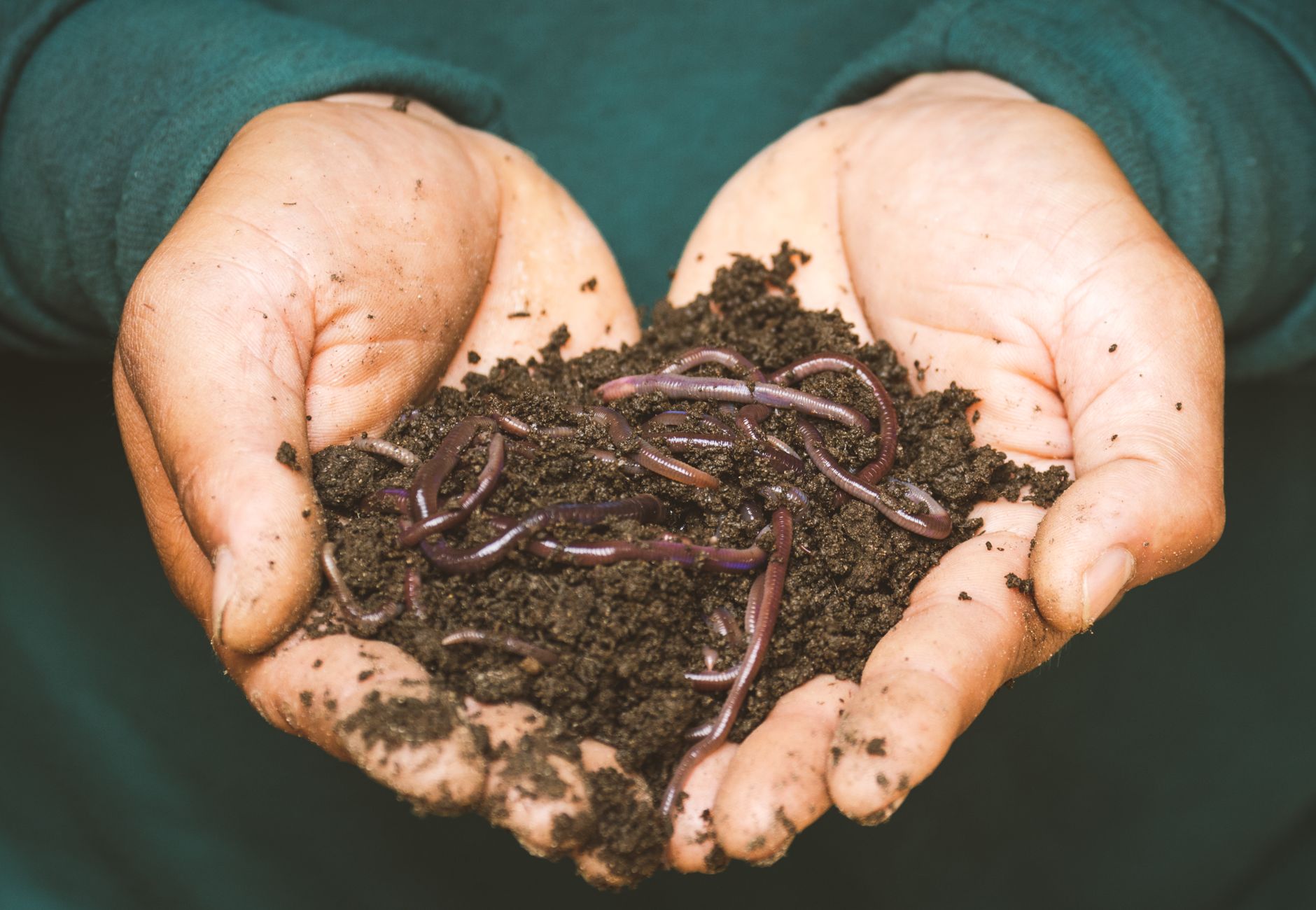 Photo by Sippakorn Yamkasikorn on Pexels.
What Worm Castings Actually Are
Vermicast, the technical name for worm castings, is not simply worm manure. That framing undersells it dramatically. When earthworms process organic matter through their digestive tracts, they inoculate that material with gut bacteria, enzymes, and fungal spores. What emerges is a biologically active amendment packed with humic acids, plant growth hormones, and beneficial microorganisms in concentrations you won't find in any bag of 10-10-10.
A single gram of quality worm castings can contain over a billion colony-forming bacterial units. Synthetic fertilizer contains zero.
Why NPK Is an Incomplete Story
Nitrogen, phosphorus, and potassium, the holy trinity of conventional fertility, matter. But feeding a plant only NPK is like feeding a child only protein powder. You're hitting one metric while ignoring the whole system.
Plants don't just absorb nutrients; they negotiate for them. Through root exudates, they signal microbial partners to unlock specific minerals, fix atmospheric nitrogen, and shuttle phosphorus across distances roots can't reach alone. Synthetic fertilizers bypass that negotiation entirely, flooding the zone with soluble nutrients that require no microbial mediation. Convenient in the short term. Devastating over decades.
Worm castings work the other direction: they restore the negotiation.
The Suppression Effect Nobody Talks About Enough
Here's what surprises most growers the first time they read the research, worm castings actively suppress plant pathogens. Studies from Ohio State University and others have documented significant reductions in damping-off (caused by Pythium and Rhizoctonia) when castings are incorporated into growing media or used as a top dressing.
The mechanism isn't fully mapped, but the leading explanation points to chitinase-producing bacteria in castings that break down the chitin in fungal cell walls. Essentially, the biology in the castings is outcompeting and suppressing the biology you don't want.
Synthetic fertilizers don't do that. They can't. They have no biology to offer.
How to Use Them Without Wasting Money
Castings are more concentrated than most people expect, and less is genuinely more. Over-application doesn't harm plants the way synthetic over-fertilization can, but it wastes a resource that takes time to produce.
Practical application rates that work:
- Seed starting mix: Blend 10–20% castings by volume with your base medium
- Transplanting: A small handful (roughly ¼ cup) worked into each planting hole
- Top dressing: A thin layer, ½ inch, around established plants, watered in
- Casting tea: Steep 1 cup of castings in 1 gallon of non-chlorinated water for 24 hours; apply as a foliar spray or soil drench
Timing matters too. Apply during active growth periods when root systems are expanding and can take full advantage of the microbial handoff happening at the soil-root interface.
graph TD
    A[Organic Matter Input] --> B(Worm Digestive Tract)
    B --> C[Worm Castings]
    C --> D{Application Method}
    D --> E[/Soil Incorporation/]
    D --> F[/Top Dressing/]
    D --> G((Casting Tea))
    E --> H[Plant + Soil Biology Response]
    F --> H
    G --> H
Making Your Own vs. Buying
Vermicomposting at home is genuinely simple. A bin, red wigglers (Eisenia fetida), and kitchen scraps, vegetable trimmings, coffee grounds, cardboard, are all you need. A healthy system will process roughly half its worm weight in organic matter per day. After 60–90 days, you're harvesting castings that cost you almost nothing beyond a little attention.
Buying castings is fine if you trust your source; look for products that specify they were produced from diverse feedstocks, not purely paper waste or a single input. Single-feedstock castings are nutritionally narrow. Diversity in, diversity out.
The Longer View
Growing with worm castings isn't about swapping one input for another. It's about shifting what you're trying to accomplish. Synthetic fertilizers feed the plant. Worm castings feed the system, the soil, the microbes, the fungal networks, the plant roots, all of it at once.
That distinction sounds philosophical until you've watched two beds side by side for a few seasons: one fed with bagged synthetic, one built with castings and attention. The gap becomes impossible to explain away.
Go beyond organic. Build the soil, and let the soil do the rest.
Get Authentic Farming in your inbox
New posts delivered directly. No spam.
No spam. Unsubscribe anytime.